


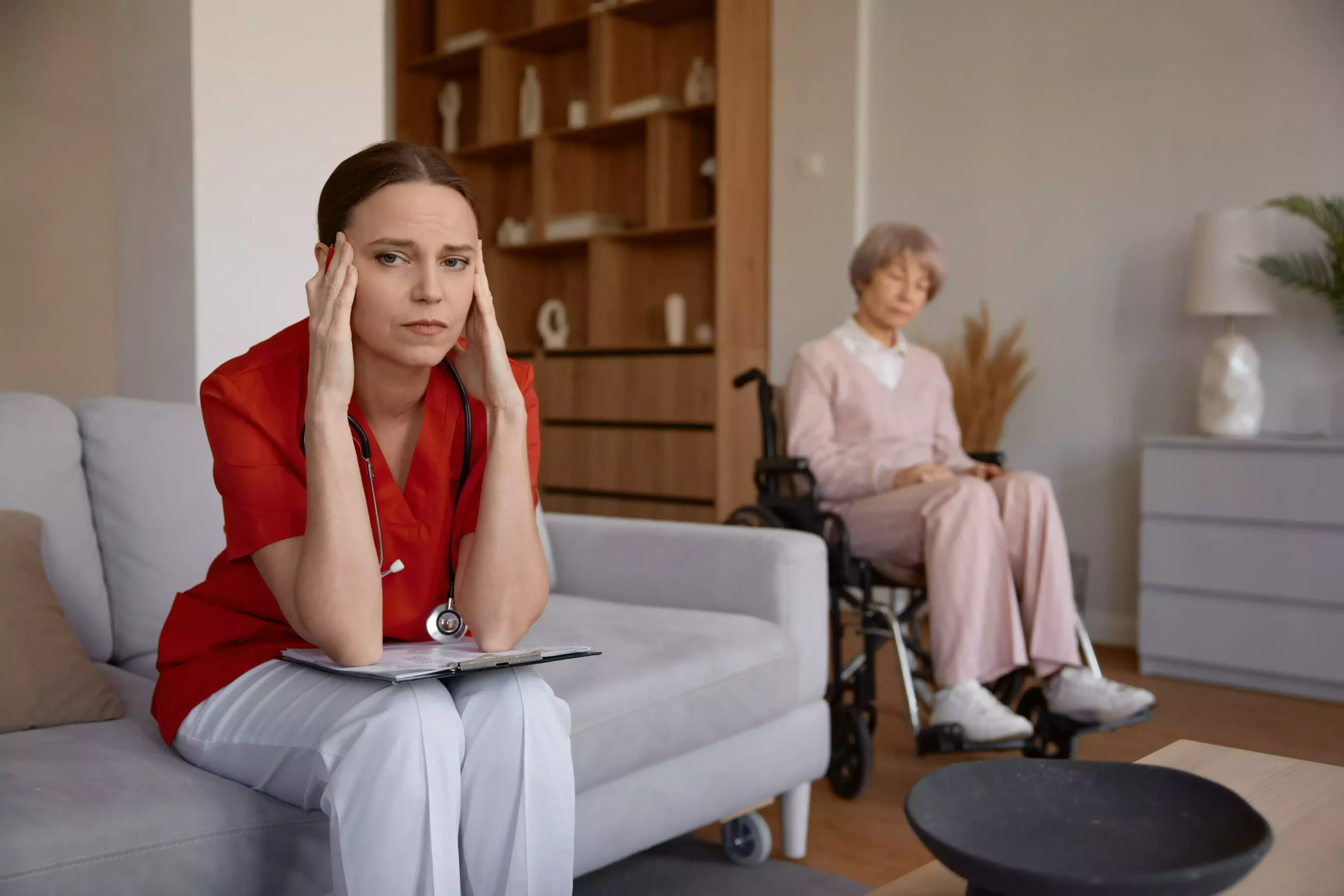
Caregiver burnout rarely happens all at once.
It doesn’t arrive with a clear breaking point or a dramatic collapse. Instead, it builds quietly — through small moments of exhaustion, emotional overload, and ignored needs.
Many caregivers don’t realize they are burning out. They simply believe they are “not coping well enough,” “not strong enough,” or “not trying hard enough.”
In reality, caregiver burnout is not a personal failure.
It is a natural response to prolonged stress without adequate support.
What Caregiver Burnout Really Is
Caregiver burnout is a state of physical, emotional, and mental exhaustion caused by long-term caregiving responsibilities.
Unlike temporary tiredness, burnout does not improve with a single night of rest. It lingers, deepens, and slowly affects every area of life.
Burnout often includes:
Chronic fatigue
Emotional numbness
Irritability or anger
Loss of motivation
A sense of hopelessness
Many caregivers keep going through burnout because they feel they have no alternative.
Many caregivers ignore these signs because exhaustion has become their normal.
🔗 → Why Caregivers Feel Exhausted Even When They Love Who They Care For
Why Burnout Often Goes Unnoticed
Caregiver burnout is easy to miss — especially by caregivers themselves.
Why?
Because caregivers are used to pushing through discomfort.
They normalize exhaustion.
They minimize their own pain.
Common thoughts include:
“This is just part of caregiving.”
“Others have it worse.”
“I don’t have the right to complain.”
Over time, this mindset makes burnout invisible — until it becomes overwhelming.
Early Warning Signs Caregivers Often Ignore
Burnout doesn’t start with collapse. It starts with signals that are easy to dismiss.
Constant Tiredness That Never Lifts
You wake up already exhausted, even after sleeping. Rest no longer feels restorative.
Increased Irritability or Impatience
Small things trigger frustration, anger, or tears — even when you don’t want them to.
Emotional Numbness
You feel detached, flat, or disconnected — not only from others, but from yourself.
Loss of Joy or Interest
Activities that once mattered feel pointless or draining.
Difficulty Concentrating
Brain fog, forgetfulness, and trouble making decisions become common.
These signs are often mistaken for personal weakness rather than stress overload.
Physical Symptoms of Caregiver Burnout
Burnout is not only emotional. It affects the body as well.
Caregivers may experience:
Headaches or migraines
Muscle pain and tension
Digestive issues
Changes in appetite
Frequent illness
Sleep disturbances
The body often expresses what the caregiver has no space to acknowledge emotionally.
Burnout is often fueled by unspoken grief that caregivers rarely acknowledge.
🔗 → The Silent Grief Caregivers Experience but Rarely Talk About
Emotional Red Flags That Should Not Be Ignored
Some emotional signs of burnout are especially important to notice.
These include:
Feeling resentful toward the person you care for
Fantasizing about escape or disappearing
Feeling trapped or hopeless
Excessive guilt for wanting rest or relief
Feeling like nothing you do is ever enough
These feelings are painful — and often deeply shame-inducing.
But they are signals, not moral failures.
Why Caregivers Feel Guilty for Burning Out
Caregivers are often praised for being “selfless,” “strong,” and “devoted.”
This praise can quietly trap them.
Caregivers may believe:
Needing help means failing
Setting limits means being selfish
Rest means neglect
As a result, burnout is met with guilt instead of care.
But guilt does not prevent burnout — it accelerates it.
The Long-Term Cost of Ignoring Burnout
When caregiver burnout is ignored, it doesn’t stay the same. It escalates.
Long-term consequences may include:
Depression
Anxiety disorders
Chronic health conditions
Emotional withdrawal
Breakdown of relationships
Inability to continue caregiving
Many caregivers only seek help when burnout has already caused significant damage — to their health, identity, or sense of self.
Burnout Does Not Mean You Love Less
One of the most harmful myths caregivers carry is this:
“If I’m burned out, it means I don’t care enough.”
This is false.
Burnout does not reflect the depth of your love.
It reflects the weight of responsibility carried alone for too long.
You can love deeply and still be exhausted beyond your limits.
What Helps Prevent or Ease Caregiver Burnout
There is no single solution to burnout. But there are meaningful shifts that can help.
Acknowledge the Burnout
Naming what you are experiencing reduces shame and opens the door to support.
Redefine What “Enough” Means
You do not need to give everything you have to be a good caregiver.
Build in Realistic Breaks
Breaks do not have to be long — they need to be consistent and protected.
Share the Load Where Possible
Even small forms of help reduce emotional pressure.
Seek Emotional Support
Being heard without judgment is one of the most powerful buffers against burnout.
Why Self-Care Advice Often Falls Short
Caregivers are often told to “practice self-care.”
While well-intentioned, this advice can feel dismissive.
Caregiver burnout is not solved by:
A single day off
A bubble bath
Positive thinking
Burnout requires structural and emotional support, not just moments of relief.
Self-care must be realistic, accessible, and ongoing.
Learning to ask for help is one of the most effective ways to prevent burnout.
🔗 → Why Asking for Help Is Hard for Caregivers — and Why It Matters
You Are Not Weak for Reaching Your Limit
Burnout is not a sign that you are failing.
It is a sign that the situation is too demanding for one person to manage alone.
Recognizing burnout is not giving up.
It is an act of responsibility — toward yourself and toward the person you care for.
A Compassionate Message to Caregivers
If you recognize yourself in these signs, you are not broken.
You are responding normally to an abnormal level of stress.
You deserve:
Rest without guilt
Support without judgment
Care that includes you
Caregiving should not require sacrificing your health, identity, or future.
Remember This
You do not have to reach complete collapse to deserve help.
You do not have to prove your exhaustion to justify rest.
You do not have to carry this alone.
Caregiver burnout is not the end of your ability to care.
It is a signal that you matter, too.



0 Comments